
Why This Book Matters
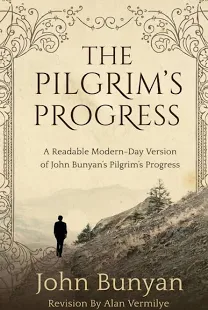
There’s a version of Christianity floating around today that sells comfort. Come to Jesus and your problems will melt away. John Bunyan didn’t get that memo. Writing from a prison cell in 1678, he gave the church something far more honest — a picture of the Christian life as it actually is: a war. Not a metaphorical, abstract, theological-concept kind of war. A grinding, exhausting, “I don’t know if I’m going to make it” kind of war. And that’s exactly why every believer needs to read this book.
What It’s About
The Pilgrim’s Progress follows a man named Christian as he flees the City of Destruction and journeys toward the Celestial City. Along the way he falls into the Slough of Despond, gets deceived by Mr. Worldly Wiseman, fights Apollyon in hand-to-hand combat, nearly rots in Doubting Castle under Giant Despair, and walks through Vanity Fair where the world puts everything shiny in front of him to get him to stop moving forward. It’s allegory, but it doesn’t read like allegory. It reads like your Tuesday.
What Hit Me the Hardest
I came to this book later in my walk — not as a new believer, but as someone who’d already been through enough to know that the Christian life doesn’t come with a cruise ship ticket. The scene that caught me off guard was the Slough of Despond. Christian is barely out of the gate and he’s already sinking.
There’s been a specific season in my own life where that’s exactly what it felt like — the weight of conviction, the doubt, the feeling that maybe I wasn’t cut out for this. But it’s also something I’ve watched play out in the lives of other believers time and time again. Bunyan nails it because he lived it. The man wrote this from a jail cell. He wasn’t theorizing about suffering — he was neck-deep in it.
Why You Should Read It
Three things make this book essential.
First, Bunyan takes theology and makes it experiential. This isn’t a systematic theology textbook. It’s doctrine you can feel. When Christian’s burden falls off at the cross, you feel the relief. When he fights Apollyon, you feel the terror. When he enters the Celestial City, you feel the weight of glory. Very few authors in church history have been able to do that.
Second, the book is a masterclass on the perseverance of the saints. Christian doesn’t make it because he’s strong. He makes it because grace carries him. Every time he falls, every time he wanders, there’s a provision waiting — a key called Promise, a companion named Hopeful, a shepherd pointing him back to the path. That’s not wishful thinking. That’s Romans 8:28–30 in narrative form.
Third — and this is the part that’s almost eerie — the book is 350 years old and it describes your Monday morning. The distractions of Vanity Fair? That’s your phone. Mr. Worldly Wiseman’s “practical” advice to avoid the cross? That’s half the self-help section at Barnes & Noble. Giant Despair locking you in a dungeon of hopelessness? That’s the 2 AM spiral when you’re wondering if any of this is real. Bunyan wrote about the 17th century and accidentally wrote about the 21st.
Who This Book Is For
If you’re a new believer, this book will prepare you for what’s ahead — and that’s a gift, even if it doesn’t feel like one at first. If you’ve been walking with Christ for decades, it’ll remind you that the battle is real, the enemy is real, but the destination is guaranteed for those who are in Christ. Either way, you’ll close this book with a deeper understanding of what it means to run the race with endurance (Hebrews 12:1) and fight the good fight of faith (1 Timothy 6:12).
Bunyan didn’t write a feel-good book. He wrote a true one. And the church has been reading it for three and a half centuries because truth doesn’t expire.