
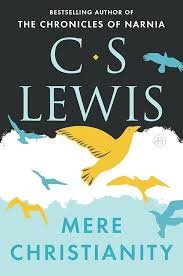
Why This Book Matters
I picked this book up about a year ago when I made a deliberate decision to go deeper in my faith. I was already walking with the Lord, but I wanted more — more understanding of who God is and what His purpose is for my life. Mere Christianity was the book that kicked off that pursuit, and it set the bar impossibly high for everything I’ve read since.
What Makes Lewis Different
What strikes me most about Lewis is that he was a layman. Not a pastor, not a seminary professor — a scholar, yes, but a man without a pulpit who understood the things of God and human nature at a depth most people never reach. He was a confirmed atheist in his younger years who came to Christ and spent the rest of his life expounding on what God did for him. If that’s not a testimony, I don’t know what is. And if Lewis could go that deep in his time, there’s nothing stopping any of us now.
What Hit Me the Hardest
The book is structured in four parts, and each one builds on the last — but Book 2, “What Christians Believe,” is where Lewis plants his flag. He doesn’t tiptoe around who Jesus is. He lays out the case that Christ cannot simply be a “good moral teacher.” Either He was who He said He was, or He was a liar or a lunatic — there’s no comfortable middle ground. But it’s not just one argument that gets you. It’s the cumulative force of the entire section. Lewis builds his case like a trial lawyer — each chapter adding weight until the conclusion isn’t just reasonable, it’s unavoidable. By the time you finish that section, the idea of Jesus as merely a wise philosopher is off the table.
One line from the chapter on Charity still stays with me: “Do not waste time bothering whether you ‘love’ your neighbor; act as if you did.” That’s profound because Scripture commands us to love our neighbor as ourselves — and here Lewis cuts through all the overthinking and says just do it. That’s real charity. That’s the real act of being Christian. I’ll be honest — loving others and showing mercy has never come naturally to me. But Christ had mercy on me, so learning to be more like Him means removing that selfishness and extending the same grace I’ve been given.
A Gateway to Something Deeper
Here’s what I didn’t expect: this book opened a door I didn’t know was there. After Mere Christianity, I went in two directions at once. I read more Lewis — The Great Divorce, The Screwtape Letters — because his way of thinking sharpened how I engage with truth. But I also started moving toward Reformed theology. MacArthur, Sproul, the doctrines of grace. Lewis lit the fuse, and the explosion led me into a depth of study I didn’t know I was hungry for until I started eating.
What’s interesting is that Lewis himself was Anglican, not Calvinist. He intentionally avoided denominational distinctives in this book — he wanted to present what he called “mere” Christianity, the core that all believers share. I appreciate that approach because the foundation he lays is rock solid regardless of your tradition. At the same time, there are places where I’d go further doctrinally — places where the Reformed understanding of Scripture fills in what Lewis left open on purpose. That’s not a criticism. It’s actually what makes the book so effective as a starting point. He gives you the essentials and trusts you to keep digging. And if you do keep digging, you’ll end up somewhere deeper than you thought possible.
The Real Message
The book is packed with statements like that — simple truths that hit so hard you wonder why you didn’t see them yourself. And Lewis sums it all up with what I believe is the real message: to come to Christ, you have to give up self. Let Him shape you into the person He wants you to be. Take up your cross daily and sacrifice yourself to the One who died so that you may live. Throw away the old man and walk in the new one.
Who This Book Is For
This book is for everyone — the new believer, the long-suffering saint, the skeptic. Read it cover to cover. Then read it again. There’s that much packed inside these pages.